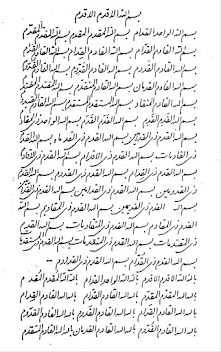
The Theological Falsity of the Bahāʾī Covenant: A Bayānī Critique

The central claim of the Bahāʾī covenant is that authority passed in an unbroken and divinely guaranteed line from the Bāb (d. 1850) to Bahāʾuʾllāh (d. 1892), from Bahāʾuʾllāh to ʿAbd al-Bahāʾ (d. 1921), from ʿAbd al-Bahāʾ to Shoghi Effendi (d. 1957), and ultimately to the institutions established under the so-called Bahāʾī administrative order. According to Bahāʾī doctrine, this covenant functions as a unique safeguard against schism and serves as the decisive proof of the divine origin of the religion. Yet from an Azalī-Bayānī perspective, the covenant is not merely historically problematic but theologically untenable. It rests upon a retroactive reconstruction of sacred history that conflicts with the explicit documentary record, the succession established by the Bāb Himself, and the very principles of revelation articulated within the Bayān.
The first difficulty concerns the succession of the Bāb. The documentary evidence overwhelmingly demonstrates without any doubt that the Bāb designated Mīrzā Yaḥyā Ṣubḥ-i-Azal (d. 1912) as His successor. This fact was acknowledged not only by Azalīs but by early Bahāʾīs themselves, who generally admitted that Azal occupied the position of nominal head of the Bābī community after the martyrdom of the Bāb. The dispute concerns not whether the appointment occurred but how it should be interpreted. Later Bahāʾī apologetics developed the theory that Ṣubḥ-i-Azal was merely a screen or proxy behind whom Bahāʾuʾllāh exercised the true authority of leadership. I call this the Bahāʾī scarecrow theory. Yet this explanation is conspicuously absent from the contemporary documentary record. Instead, one encounters repeated affirmations by Bahāʾuʾllāh himself recognizing Ṣubḥ-i-Azal’s authority. Particularly striking are those texts in which Bahāʾuʾllāh not only acknowledges Azal’s station but explicitly validates his interpretations of the Bāb’s revelation. In one such tablet (linked), Bahāʾuʾllāh states that whatever the “Mirror of Pre-Eternity” expounds concerning the Words of God is truth without doubt and that independent interpretation contrary to it constitutes shirk (polytheism). Such statements are exceedingly difficult to reconcile with the notion that Azal was merely an empty figurehead.
The theological implications are profound. If Bahāʾuʾllāh genuinely regarded Ṣubḥ-i-Azal as possessing authoritative interpretive authority during the Baghdad period (1852-1863 CE), then the later claim that Bahāʾuʾllāh alone possessed legitimate authority from the beginning cannot be sustained without transforming the plain meaning of the earlier texts. The result is a hermeneutic in which documentary evidence ceases to have objective value. Every statement affirming Azal becomes reinterpreted as an indirect affirmation of Bahāʾuʾllāh. Every declaration of obedience to Ṣubḥ-i-Azal becomes obedience to a hidden authority standing behind him. Such a method effectively immunizes the covenant narrative from falsification but only by rendering historical evidence incapable of disproving it under any circumstances.
A second and more fundamental difficulty concerns the Bayān itself. The Bāb established a clear covenantal framework centered upon recognition of He whom God shall make Manifest (man yuẓhiruhu’llāh). Yet the Bayān nowhere presents hereditary succession, administrative institutions, or a permanent clerisy-like structure as the locus of divine authority. On the contrary, the Bayān is radically eschatological. Its horizon is perpetually directed toward future manifestation. Authority remains inseparable from fresh divine disclosure and Ṣubḥ-i-Azal was considered by the Bāb a central, pivotal component of it. For example, in one Tablet the Bāb states:
“And verily, God indeed loves that the intended destination (maqṣad) of that Letter [meaning, Ṣubḥ-i-Azal, whose letter in this epistle is the letter thāʾ (ث) - WA] be elevated ever upward, such that it may become in this Day a proof-indicator (dalīl) unto He whom God shall make Manifest (man yuẓhiruhu’llāh), and a Path (sabīl) for whosoever desires the Encounter with God (liqāʾ allāh) on the Day of Resurrection (yawm al-qiyāma)!”
That Ṣubḥ-i-Azal is the one intended is clear and unequivocal. See the epistle of the Bāb cited by Ṣubḥ-i-Azal in His kitāb-i-mustayqiẓ (Book of the Sleeper Awakened) in BnF Arabe 6248, online: 471 (MS pagination)/944 in PDF (quotation rubricized in red). Elsewhere in the same work, Ṣubḥ-i-Azal also cites this epistle from the Point of the Bayān regarding Him, referring to Him as “that Letter.” To wit,
“Verily, what God hath decreed within that Manifestation is the elevation of that Letter [i.e. thāʾ ث] within that Name and His invoked remembrance by night and by day according to the number of the hāʾ (ه) [=5] [meaning, to send a formula of salutation upon Ṣubḥ-i-Azal to that number - WA], that it may become for thee pathways and a guiding proof unto the Day of the Resurrection at the Manifestation of He whom God shall make Manifest. And until the Hour itself ariseth at the dawning-forth of the Fire of God, veil not thyself from that remembrance whilst thou remainest possessed of knowledge thereof. And if thou hast forgotten—even if thou wert in thy blindness—then nothing shall rest upon thee in the Book of God. But if thou veilest thyself after thy knowledge, then there shall become incumbent upon thee the number of the hāʾ (ه) [=5] from the Green Emerald. And this is so that the Command of God may keep watch over thee. Otherwise God—glorified be It—is Self-Sufficient and Exalted; Enriching and Self-Disclosing; Absolutely Independent and Exalted. Delimitations (ḥudūdāt) have not been delimited save for the establishment of Its Cause in every Manifestation amidst the onticities (kaynūnīyāt) of contingent beings. And verily, the Fruit of that within thy life is that thou attainest unto the good-pleasure of thy Lord and Its Command. And after thy death God shall admit thee, through thy purchase thereof, wholly into the Mystery of the Ghayn (غ) [=1000]: a lofty and towering palace, and a magnificent, exalted, and impregnable canopy!”
وَإِنَّ مَا قَدَّرَ اللهُ فِي ذَلِكَ الظُّهُورِ ارْتِفَاعُ ذَلِكَ الْحَرْفِ فِي ذَلِكَ الْاِسْمِ، وَذِكْرُهُ فِي اللَّيْلِ وَالنَّهَارِ عَدَدَ الْهَاءِ لِيَكُونَ لَكَ سُبُلًا دَلِيلًا لِيَوْمِ الْقِيَامَةِ عِنْدَ ظُهُورِ مَنْ يُظْهِرُهُ اللهُ. وَإِلَى أَنْ تَقُومَ السَّاعَةُ عِنْدَ طُلُوعِ نَارِ اللهِ، وَلَا تَحْتَجِبْ عَنْ ذَلِكَ الذِّكْرِ وَأَنْتَ عَلَى عِلْمٍ بِهِ، وَإِنْ نَسِيتَ وَلَوْ كُنْتَ فِي عَمَاكَ فَلَاشَيْءَ عَلَيْكَ فِي كِتَابِ اللهِ، وَلَكِنَّكَ إِذَا احْتَجَبْتَ بَعْدَ عِلْمِكَ يَلْزَمُكَ عَدَدُ الْهَاءِ مِنَ الزُّمُرُّدِ الْخَضْرَاءِ، وَذَلِكَ لِتُرَاقِبَكَ أَمْرَ اللهِ، وَإِلَّا اللهُ سُبْحَانَهُ غَنِيٌّ مُتَعَالٍ وَمُغْنِي مُتَجَالٍ وَمُسْتَغْنِي مُتَعَالٍ. مَا حُدِّدَتِ الْحُدُودَاتُ إِلَّا لِإِثْبَاتِ أَمْرِهِ فِي كُلِّ ظُهُورٍ فِي كَيْنُونِيَاتِ الْمُمْكِنَاتِ، وَإِنَّ ثَمَرَةَ ذَلِكَ فِي حَيْوتِكَ أَنْ بَلَغْتَ إِلَى رِضَاءِ رَبِّكَ وَأَمْرِهِ. وَمِنْ بَعْدِ مَوْتِكَ يُدْخِلُكَ اللهُ بِابْتِيَاعِكَ كُلًّا فِي الْغَيْنِ قَصْرٌ مُتَشَامِخٌ رَفِيعٌ وَرَفْرَفٌ مُتَبَاذِخٌ مَنِيعٌ
482-3 (MS pagination)/967-8 (PDF); the vocalization of the Arabic is mine. That Ṣubḥ-i-Azal is the one intended is explicitly clarified further in the text with this quotation:
“And verily, when We witnessed a discourse (khaṭb) from His Presence—Our Mirror—We desired to mention Him with the remembrance of those who recollect: those who love to be remembered by virtue of that through which God has already remembered them, and who rejoice in the Remembrance of God! This is that which hath descended from the Address of the Mirror! [Let] you behold within it!”
وَإِنَّا لَمَّا شَهِدْنَا خَطْبًا مِنْ عِنْدِهِ مِرْآتَنَا، أَرَدْنَا أَنْ نَذْكُرَهُ ذِكْرَ الْمُتَذَكِّرِينَ الَّذِينَ هُمْ يُحِبُّونَ أَنْ يُذْكَرُوا بِمَا قَدْ ذَكَرَهُمُ اللَّهُ، وَهُمْ بِذِكْرِ اللَّهِ فَرِحُونَ. هَذَا مَا نَزَلَ مِنَ الْخِطَابِ الْمِرْآةِ، أَنْتُمْ فِيهَا تَنْظُرُونَ
PDF: 1018 (my vocalization). And yet further in the text we read the Bāb telling one Bāqir:
Verily, recite every night and day [to] the number of the Name of the Last (al-ākhir) [i.e. 801] within the verse; and say: ‘Aid them, God, through the Pre-Eternal Remembrance (al-dhikr al-azal) with an exalted succouring’!
إِنَّ ٱتْلُ فِي كُلِّ لَيْلَِ وَنَهَارٍ عَدَدَ ٱسْمِ ٱلْآخِرِ فِي ٱلْآيَةِ، وَقُلْ: ٱنْصُرُوا ٱللَّهَ بِٱلذِّكْرِ ٱلْأَزَلِ تَنْصِيرًا رَفِيعًا
These are just some of the countless documentary confirmations by the Bāb regarding Ṣubḥ-i-Azal’s status.
That said, the Bahāʾī covenant, by contrast, transforms this open eschatological structure into an institutional chain culminating in bureaucratic governance. The movement from the Bayān to the modern Bahāʾī administrative order therefore represents not the fulfillment of the Bayān’s covenantal logic but its total inversion. The locus of authority shifts from revelation to administration, from manifestation to institution, and from theophany to cynical organizational continuity.
This transformation becomes even more evident after the death of Shoghi Effendi. According to Bahāʾī doctrine, the Guardianship was intended to provide authoritative interpretation while the Universal House of Justice would legislate on matters not explicitly covered in the sacred texts. Yet Shoghi Effendi died without appointing a successor (even though some expelled family claim that he intended to appoint his cousin, Zahra Shahid, to succeed him). The hereditary principle at the heart of the so-called Bahāʾī covenant collapsed. The resulting theological solution was to continue with the Universal House of Justice while leaving the Guardianship permanently vacant. This outcome exposes a profound contradiction. If the covenant was uniquely designed to prevent division and guarantee continuity, then one of its principal institutions ceased functioning after a single generation. What emerged was not an unbroken covenantal chain but a modified structure compelled by historical circumstances.
From a Bayānī perspective, the deeper issue is that the Bahāʾī covenant substitutes institutional infallibility for revelatory authority. The Bāb’s writings repeatedly stress the absolute primacy of the Divine Manifestation. Truth resides in the Manifestation and in recognition of Him, and Ṣubḥ-i-Azal was considered by the Bāb to be such a Divine Manifestation in the status of the Mirror of the Bayān. The Bahāʾī covenant gradually relocates that authority into a succession of human figures and ultimately into administrative bodies. The result is a theology in which obedience to institutional structures becomes the criterion of faithfulness. Such a conception stands in tension with the Bayān’s relentless emphasis on immediate recognition of Divine Disclosure and the perpetual transcendence of God beyond all fixed forms.
The historical record of the Azal-Bahāʾī split reinforces this conclusion. Rather than demonstrating the covenant’s success in preventing schism, the earliest history of the movement reveals precisely the opposite. The central claim of the covenant arose from a contested succession in which both parties appealed to the legacy of the Bāb. The existence of the schism itself indicates that the alleged clarity of the covenant was not evident to those closest to the events. The subsequent victory of the Bahāʾī interpretation owed much to demographic, social, and institutional factors. Success, however, does not establish theological truth. Many religious movements have triumphed historically without thereby proving the correctness of their claims. Sunnism is a classic example of this.
Ultimately, the Bahāʾī covenant appears less as the fulfillment of the Bāb’s covenantal vision than as a retrospective theological construction designed to legitimize the temporary outcome of the Azal-Bahāʾ schism—temporary, because we contend this conflict is not over yet. It requires the reinterpretation of explicit documents affirming Ṣubḥ-i-Azal’s authority, the transformation of the Bayān’s open eschatology into institutional permanence, and the acceptance of a succession model that itself suffered a decisive rupture with the extinction of the Guardianship. From the standpoint of Bayānī theology, therefore, the Bahāʾī covenant cannot be regarded as the continuation of the Bāb’s dispensation. Rather, it represents a post-Bāb an illegitimate innovation that displaced the original covenant centered upon the Manifestation of Ṣubḥ-i-Azal and replaced it with a doctrine of institutional authority. For that reason, the Bahāʾī covenant is not merely historically questionable; it is theologically false. Furthermore, by this criteria, this makes all Bahāʾīs to be the true covenant breakers.
The theological contrast becomes even sharper when one considers the radically different conceptions of sacred authority that underlie the Bayān and the later Bahāʾī covenant. At its core, the Bayān is a text of perpetual eschatological expectancy. Its entire horizon is oriented toward the advent of man yuẓhiruhu’llāh (which the Bayān marks with the numerological ciphers of 2001 and 1511). Every law, ordinance, symbol, and command is subordinated to recognition of the future Manifestation and the Mirrors leading up to Him. The Bayān repeatedly destabilizes fixed forms, reminding its readers that no revealed order possesses independent permanence before the advent of a new Divine Disclosure. Indeed, one of the central lessons of the Bayān is that attachment to inherited forms, institutions, and interpretations becomes the principal cause of veiling whenever God manifests Itself anew. The Bayān therefore inculcates a spiritual disposition of radical openness before the possibility of fresh revelation. However, the Bahāʾī founder was not a Manifestation. Instead, he was a cynical usurper whose earlier claims of servitude to Ṣubḥ-i-Azal are documented.
The Bahāʾī covenant, by contrast, gradually redirects the center of gravity away from this eschatological openness toward institutional continuity—with institutional continuity being its form of capture by Western imperialism. The primary concern ceases to be preparedness for the disruptive irruption of Divine Manifestation and becomes instead preservation of communal unity through obedience to bureaucratic designated authorities and administrative structures. The question shifts from “How shall the believer recognize God when He appears?” to “How shall the community preserve itself from division?” These are not identical concerns. The former is theological and apocalyptic; the latter is sociological and institutional. What emerges is a subtle but decisive relocation of religious authority from the realm of Revelation to the cynical realm of governance.
This shift is reflected in the language of the two traditions. The Bayān speaks incessantly of manifestation (ẓuhūr), appearance, unveiling, recognition, and the ever-renewed act of divine self-disclosure. The covenantal literature of later Bahāʾism increasingly speaks of succession, guardianship, administration, authority, and obedience. The dominant concern becomes the protection of a community rather than the perpetual transcendence of God beyond every community. In Bayānī terms, however, this transition risks transforming the means into the end. Institutions, which ought to remain provisional instruments subordinate to revelation, begin to assume a quasi-sacral status of their own.
The irony is profound. The Bayān presents sacred history as a recurring dramaturgy in which religious communities repeatedly absolutize the forms left behind by previous Manifestations and thereby fail to recognize the next one. The Jews clung to inherited expectations and failed to recognize Jesus. Many Christians clung to inherited dogmas and failed to recognize Muḥammad. Muslims clung to inherited certainties and failed to recognize the Bāb. Yet the cynical covenantal doctrine of Bahāʾism effectively claims to have solved this perennial problem through the establishment of “infallible” institutions and authorized interpreters. From a Bayānī perspective, however, this merely reproduces the very pattern that the Bayān seeks to expose. The object of attachment changes, but the mechanism of attachment remains the same.
Indeed, one may argue that the administrative order represents the culmination of a process of sociological routinization that the Bayān itself sought to resist. What begins with the immediacy of revelation gradually becomes stabilized in offices, procedures, elections, committees, constitutional arrangements, and juridical mechanisms. The charismatic and apocalyptic impulse that animated the original Bābī movement yields to institutional rationalization. The locus of certainty is no longer the living encounter with Divine Manifestation but confidence in the decisions of established bodies. The movement thus passes from a theology of divine interruption to a theology of administrative continuity.
From this standpoint, the ultimate weakness of the Bahāʾī covenant is not merely that it conflicts with certain historical documents or that its succession narrative encounters difficulties. Its deeper weakness is that it reverses the theological orientation of the Bayān itself. The Bayān points beyond every established form toward the ever-transcendent sovereignty of God manifesting through whomsoever It wills. The Bayān unsettles institutions in the name of Revelation; the Bahāʾī covenant seeks to stabilize revelation through institutions. The Bayān privileges the event of Manifestation; the Bahāʾī covenant privileges the preservation of order (especially illegitimate ones). These are not simply different emphases but fundamentally different theological visions.
For that reason, the question raised by the Azal-Bahāʾī schism ultimately transcends the personalities involved. The real issue is whether divine authority resides primarily in the recurring and unpredictable act of God’s Self-Disclosure, or whether it can be permanently embedded within a covenantal structure of succession and administration. The Bayān answers with unmistakable clarity: all things are sacrificed to the Manifestation. Every law, every community, every institution, every sacred form possesses legitimacy only insofar as it leads souls to recognition of the Divine appearance. Once permanence is attributed to the form itself, the form risks becoming an idol. From this perspective, the Bahāʾī covenant represents not the consummation of the Bayān’s theology, but its domestication and reversal. In other words, to the Bayān the Bahāʾī covenant is a form of idolatry, thus revealing the complete illegitimacy and falsity of Bahāʾism itself before God.
A Qurʾānic Critique of the Bahāʾī Concept of the Covenant
Now, the Qurʾānic understanding of covenant (mīthāq), guidance, and succession differs fundamentally from the model embodied in the Bahāʾī administrative order. The first difficulty is that the Qurʾān repeatedly locates ultimate authority in God and in the revealed Word rather than in a permanent chain of human successors. “The judgment belongs to God alone” (Q. 12:40). “If you dispute concerning anything, refer it to God and the Messenger” (Q. 4:59). The Qurʾānic solution to religious disagreement is not appeal to an infallible institution but return to Revelation. Authority remains fundamentally vertical rather than horizontal. It descends from God through revelation rather than being perpetuated through an enduring administrative apparatus.
Secondly, the Qurʾānic concept of covenant is consistently directed toward faithfulness to God rather than obedience to institutions. The Children of Israel are condemned not because they lacked an administrative center but because they violated their covenant with God (Q. 2:83–86, 5:12–13). The covenant in the Qurʾān concerns recognition of Divine guidance, moral fidelity, and obedience to God’s commands. It is not presented as a mechanism for preserving organizational unity. Indeed, the Qurʾān repeatedly portrays established religious communities as falling into error precisely because they elevated inherited structures and authorities above fresh acts of Divine guidance.
This point becomes especially clear in the Qurʾānic narratives concerning previous dispensations. The Jews possessed priests, scholars, traditions, and institutions. The Christians possessed bishops, councils, and ecclesiastical structures. Yet none of these protected them from theological deviation. The Qurʾān repeatedly criticizes the tendency to treat religious authorities as intermediaries possessing a quasi-sacral status: “They took their rabbis and monks as lords apart from God” (Q. 9:31). The criticism is not directed merely against idolatry in the conventional sense but against the displacement of divine authority onto human structures. Any doctrine that effectively relocates certainty from Revelation to institutions risks reproducing the very pattern the Qurʾān condemns.
The Bahāʾī covenant also encounters difficulty in relation to the Qurʾānic doctrine of divine testing. Throughout the Qurʾān, God deliberately leaves human beings in situations requiring discernment, struggle, and recognition. “Do the people think they will be left to say, ‘We believe,’ and not be tested?” (Q. 29:2). The Qurʾānic pattern is one of perpetual spiritual trial. The appearance of prophets, messengers, and divine signs always generates division, ambiguity, and conflict. The Bahāʾī covenant, however, is frequently presented as a mechanism that eliminates such uncertainty by providing a permanently identifiable center of authority. In effect, the covenant attempts to resolve institutionally what the Qurʾān presents as an enduring feature of the human religious condition.
A further problem arises from the Qurʾānic understanding of Divine sovereignty. God repeatedly reserves for Himself the right to guide whom He wills, choose whom He wills, and bestow His grace upon whom He wills. “God chooses for His mercy whomsoever He wills” (Q. 2:105). Revelation remains radically free and unpredictable because it depends solely upon the divine will. The Bahāʾī covenant, by contrast, seeks to stabilize authority through predetermined succession and institutional continuity. From a Qurʾānic perspective, such stabilization risks subordinating the freedom of divine action to the requirements of organizational permanence.
The deepest tension, however, concerns the meaning of covenant itself. The Qurʾānic covenant is fundamentally existential rather than institutional. It is rooted in the primordial covenant of alast: “Am I not your Lord?” (Q. 7:172). Every subsequent covenant derives from this original encounter between God and humanity. The purpose of Revelation is to renew that primordial recognition. Covenants are therefore oriented toward God, not toward organizations. Their function is remembrance (dhikr), not administration. To transform covenant into a doctrine of institutional succession is therefore to shift its center of gravity away from its Qurʾānic foundation.
The irony is that the Qurʾān repeatedly warns against precisely such developments. Religious communities become attached to forms, structures, and inherited authorities and thereby lose sight of the transcendent source from which those forms originally derived their legitimacy. The prophetic mission then appears to recall humanity to the immediacy of divine sovereignty. The Qurʾānic narrative is thus one of continual disruption of religious formalism by fresh acts of divine guidance.
From this perspective, the Bahāʾī doctrine of the Covenant represents a reversal of the Qurʾānic paradigm. Whereas the Qurʾān privileges Revelation over institution, the covenant privileges institution as the guarantor of revelation’s meaning. Whereas the Qurʾān centers divine freedom, the covenant seeks administrative continuity. Whereas the Qurʾān grounds covenant in humanity’s direct relationship to God, the covenant grounds it in obedience to a chain of designated authorities. For these reasons, a Qurʾānic reading suggests that the Bahāʾī doctrine of the Covenant is not the culmination of the prophetic pattern but a departure from it, replacing the dynamic and ever-renewed sovereignty of God with the relative permanence of institutional authority. From this Qurʾānic perspective, again, the Bahāʾī administrative order amounts to a form of idolatry.
The Closure of Revelation and the Betrayal of the Bayān: A Bayānī Critique of Bahāʾuʾllāh’s Doctrine of 1000 and 500-Hundred Thousand Years
The doctrine articulated by Bahāʾuʾllāh in the Aqdas and elsewhere—that any claimant to revelation before the expiration of one thousand years is necessarily an impostor and that a true manifestation appears only once in five hundred thousand years—constitutes one of the most radical departures from the theology of the Bayān. Indeed, from a Bayānī perspective, these statements amount to a repudiation of the very covenantal structure established by the Bāb.
The Bayān is an open-ended eschatological revelation. Its entire purpose is to orient humanity toward perpetual readiness for the advent of man yuẓhiruhu’llāh. Every law, every ordinance, every symbol, and every doctrine within the Bayān is subordinated to that expectation. The believer is trained to remain vigilant before the possibility of divine self-disclosure at any moment. Recognition (ʿirfān) is not deferred to a distant future but is demanded in the immediacy of the present. The Bayān repeatedly warns against attachment to inherited forms, inherited authorities, inherited interpretations, and inherited certainties. Its fundamental lesson is that God remains absolutely free to manifest Himself whenever and through whomever He wills.
Bahāʾuʾllāh’s doctrine reverses this principle entirely. Instead of preparing the believer for future Manifestation, it inoculates him against it. Instead of cultivating expectancy, it cultivates closure. Instead of directing attention toward the freedom of divine action, it imposes a chronological prohibition upon that action. The result is that recognition ceases to be a living existential challenge and becomes a settled historical event. One no longer awaits the possibility of divine manifestation; one awaits the expiration of an arbitrary theological deadline.
This creates an immediate contradiction with the logic Bahāʾuʾllāh himself employed against Islam. Muslims rejected the Bāb because they believed that no prophet could come after Muḥammad. They possessed scriptural texts, inherited interpretations, and theological arguments supporting that conviction. The Bāb’s response was that God’s sovereignty cannot be constrained by human expectations. Likewise, Bahāʾuʾllāh criticized those Bābīs who rejected his own claims because they believed man yuẓhiruhu’llāh could not appear so soon after the Bāb. Yet having defeated his opponents by appealing to the unrestricted freedom of divine manifestation, Bahāʾuʾllāh then establishes a new prohibition against future manifestations for one thousand years and elsewhere speaks of manifestations separated by five hundred thousand years. The same argument once directed against Muslims and Azalīs is now directed against anyone who might question the finality of the Bahāʾī dispensation. The logic is identical; only the beneficiaries have changed.
The contradiction becomes even more severe when viewed through the lens of covenant. In the Bayān, covenant means perpetual orientation toward the next Disclosure of God. The covenant is fulfilled through recognition of Manifestation, not through loyalty to a historical institution or figure. The entire drama of sacred history consists in God’s appearance overturning inherited expectations. The Bahāʾī doctrine, however, effectively transforms covenant into a mechanism for preventing future claims. It converts a theology of vigilance into a theology of exclusion. The believer is no longer taught to ask, “Could this be God’s new appearance?” but rather, “How can I prove that this claimant is impossible?” Such a mentality is precisely the mentality the Bayān condemns in previous religious communities.
Bahā’u’llāh says, “Whoso layeth claim to a Revelation direct from God, ere the expiration of a full thousand years, such a man is assuredly a lying impostor,” (kitāb-i-aqdas: verse 37); and in another work he says, “Erelong you will hear the call of the clamorous impostor, don’t pay attention unto him, but leave him to himself”. [Bahá’u’lláh says that someone will soon come claiming to be a Manifestation but that his manifestation only appears once in 500,000 years]…“Say: If in each day another one [another Manifestation] is manifested, the cause of God will not find rest in the cities and the lands. This is the Revelation [or Manifestation] that manifests itself [or His own Self] only once every 500,000 years time. Thus have we unveiled the cover and we lifted the veil. Blessed is the man that recognized (‘arif) the purpose of God. In his recognition (‘irafah), he has rejoiced in his heart and been made firm in the Cause, such that he be made to stumble [even] by the entire creation…” (Trans). Hajir Moghaddam & Aziz Mboya; original online, https://reference.bahai.org/fa/t/b/MAS8/mas8-22.html and https://reference.bahai.org/fa/t/b/MAS8/mas8-23.html(retrieved 1 June 2026).
The five-hundred-thousand-year statement is even more devastating in its implications. If taken literally, it renders the principle of progressive revelation almost meaningless on the scale of human history. The entire Bayānī conception of sacred history is one of recurrent divine intervention. Revelation unfolds through successive cycles of disclosure. But a manifestation appearing once every five hundred millennia effectively disappears from human historical consciousness altogether. The doctrine thus introduces a practical finality under the guise of theoretical non-finality. Formally speaking, Revelation is not closed; functionally speaking, it has been closed for all conceivable historical purposes.
Even more troubling is the implied restriction upon divine sovereignty. The Qurʾān repeatedly insists that God “creates what It wills and chooses” (Q. 28:68), that Its command is “Be! and it is” (Q. 2:117), and that none may question Its acts (Q. 21:23). The Bayān radicalizes this principle, making Divine manifestation the supreme expression of God’s unrestricted freedom. Yet Bahāʾuʾllāh’s doctrine appears to bind the future Manifestation of God to a fixed chronological schedule. One must therefore ask: who imposed this limitation? If God is absolutely free, then no creature may declare Its future action impossible. If God is not free to manifest before a thousand years, then the sovereignty so central to both the Qurʾān and the Bayān has been curtailed. As such, Bahāʾuʾllāh seeks to tie the hands of God with this pernicious doctrine.
The deepest irony is that the doctrine reproduces the very pathology that the Bāb identified as the source of religious blindness. Every previous community erected barriers against recognizing God’s next appearance. The Jews expected one thing and failed to recognize Jesus. Many Christians expected another and failed to recognize Muḥammad. Muslims expected yet another and failed to recognize the Bāb. In each case, certainty regarding the future became a veil over the present. Bahāʾuʾllāh’s thousand-year and five-hundred-thousand-year pronouncements risk creating precisely the same veil. Future believers are furnished in advance with theological reasons for dismissing any claimant without investigation. The gate of recognition is closed before anyone approaches it.
From a Bayānī standpoint, therefore, the issue is not merely that the doctrine is historically questionable or numerically implausible. The issue is that it overturns the very principle upon which the Bayān rests. The Bayān is a Revelation of radical expectancy. It teaches perpetual readiness before the unpredictable advent of God. The Bahāʾī doctrine replaces expectancy with postponement, vigilance with prohibition, and openness with closure. In doing so, it transforms covenant from preparation for manifestation into insulation against any Divine Manifestation. Such a transformation is not the fulfillment of the Bayān’s covenantal vision but its negation and absolute betrayal. This, in itself, also proves the complete falsity of the Bahāʾī covenant together with the absolute illegitimacy of Bahāʾuʾllāh himself.
Given this, Bahāʾism and its founder must be taken as nothing less than a total imposture against God and humanity alike, and rejected accordingly.
Deconstructing the Counter-Argument on Finality and Social Evolution
To fully establish the theological illegitimacy of the thousand-year and five-hundred-thousand-year strictures, one must anticipate and systematically dismantle the standard Bahāʾī theological defense. A sophisticated Bahāʾī apologist would counter this critique by arguing that progressive revelation is not merely an erratic series of apocalyptic disruptions, but an orderly, educationally calibrated process. From the Bahāʾī perspective, the kitāb-i-aqdas introduces a chronological lock (the millennium) not to arbitrarily “tie the hands of God,” but to provide a stable, protected epoch necessary for the social, structural, and spiritual maturation of humanity. They contend that just as a child requires a prolonged, stable period of schooling before moving to a higher dispensation of knowledge, so too does a globalizing humanity require a protected institutional era to internalize the laws of a unified world order before a new Divine Manifestation appears. However, when subjected to a rigorous philological and structural analysis through the lens of the Bayān, this evolutionary defense collapses into a series of profound logical and theological contradictions.
1. The Ontological Subordination of Law to Theophany
The Bahāʾī counter-argument fundamentally misapprehends the ontic nature of Revelation as articulated by the Bāb. In the theology of the Bayān, the purpose of a religious dispensation is never the horizontal preservation of a social order or the pragmatic maturation of civil institutions. Rather, the Bayān insists that the structural components of a Revelation—its laws, forms, and ordinances—possess no intrinsic, independent reality; they are entirely instrumental, existing solely to train the believer in a state of radical, vertical expectancy for the next Manifestation.
By arguing that a Manifestation must be legally barred from appearing for a thousand years so that social laws may mature, Bahāʾī theology commits a profound category mistake: it subordinates the Absolute Reality (the living Manifestation) to the Provisional Means (the social law). In Bayānī terms, this is the very definition of a spiritual veil. It prioritizes the preservation of the historical form over the sovereignty of the divine irruption, transforming provisional tools into absolute idols.
2. The Weaponization of Hermeneutical Finality
The core historical irony of the Bahāʾī position lies in its explicit duplication of the very consciousness that rejected the Bāb. When Bahāʾuʾllāh argues that any claimant before a thousand years is “assuredly a lying impostor,” he erects an identical hermeneutical barrier to the one utilized by the nineteenth-century Shi’i ʿulamāʾ. The Islamic clerical establishment relied on explicit scriptural proof-texts regarding the finality of Muḥammad’s prophetology (khatam an-nabiyyin) to dismiss the Bāb without investigation.
Bahāʾī apologetics attempts to escape this contradiction by claiming their restriction is merely dispensational rather than absolute finality—meaning Revelation is technically open, just deferred for a millennium. Yet, on an existential level, this distinction is completely meaningless. By providing future generations with a predetermined, legally binding chronological schedule, Bahāʾī theology replaces the living, terrifying necessity of spiritual discernment with an effortless, bureaucratic calculation. The believer is no longer required to gaze upon a contemporary claimant and discern the Divine Light; they need only look at a calendar. Thus, the very mechanism of blind rejection that Bahāʾī texts condemn in Islam is institutionalized and weaponized within their own covenant.
3. The Absurdity of the Five-Hundred-Thousand-Year Scale
If the one-thousand-year lock introduces a functional finality to human history, the five-hundred-thousand-year statement found in the maʾidih-yi-asmānī altogether destroys the paradigm of progressive revelation. Within the context of human civilization—which spans mere millennia—a Manifestation that appears only once every half-million years ceases to be an element of an unfolding historical education. Instead, it introduces an absolute historical vacuum. This extreme inflation of the dispensational timeline betrays a profound anxiety regarding the stability of the Bahāʾī administrative order. It reveals that the doctrine of finality is not driven by an objective reading of cosmic history or an organic unfolding of divine grace, but by an acute institutional necessity to permanently banish any potential charismatic rivals. By pushing the next legitimate Manifestation into a distant, unimaginable geological epoch, Bahāʾī theology effectively closes the gate of Revelation for the entirety of conceivable human existence, rendering the phrase “progressive revelation” a empty rhetorical placeholder.
Conclusion
Ultimately, the counter-argument that finality serves a necessary "evolutionary" purpose is exposed as an ideological defense of institutional capture. The Bayān models a universe of perpetual, unconstrained divine self-disclosure, where the sovereignty of God cannot be restricted by time, space, or numbers. Bahāʾuʾllāh’s chronological locks do not protect progressive revelation; they terminate it. By shifting the locus of certainty from the unpredictable event of theophany to the predictable calculation of a thousand-year tenure, the Bahāʾī covenant enacts the ultimate betrayal of the Bāb's vision, replacing an open sky of divine freedom with the closed ceiling of an administrative monopoly.
Given this, Bahāʾism and its founder must be taken as nothing less than a total imposture against God and humanity alike, and rejected accordingly.